wherecoinsgo.org - blockchain-based fund raising platform backed by Mempool and Blockscout
A crypto fund raising platform can be more transparent than conventional platforms, because the whole history sits on a public ledger. Bitcoin through mempool.space and all other blockchains through Blockscout.
- 3 min read
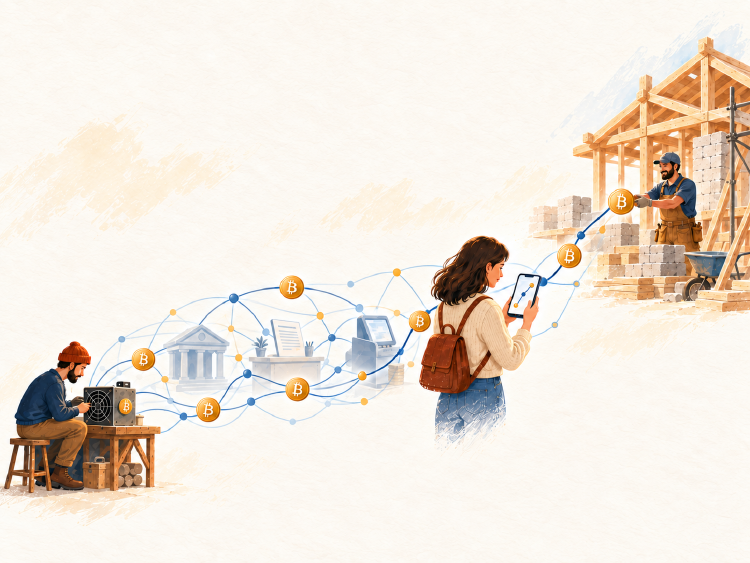
I built wherecoinsgo.org to demonstrate benefits of blockchain in the area of donation and transparency account platforms. Conventional systems oftentimes offer an illusion of transparency and provide only one layer deep visibility and mostly only on the sender side, not tracking expenditures at all. Moreover, the identity of senders and receivers is mostly very vague and not directly trusted, oftentimes just an arbitrarily written name or bank account number with no attribution to the origin of the money.
On a public blockchain the whole history is already there. In, out, what is left. Anyone can look, later, without asking permission.
Wherecoinsgo
wherecoinsgo.org offers two key features:
1. Fund raising
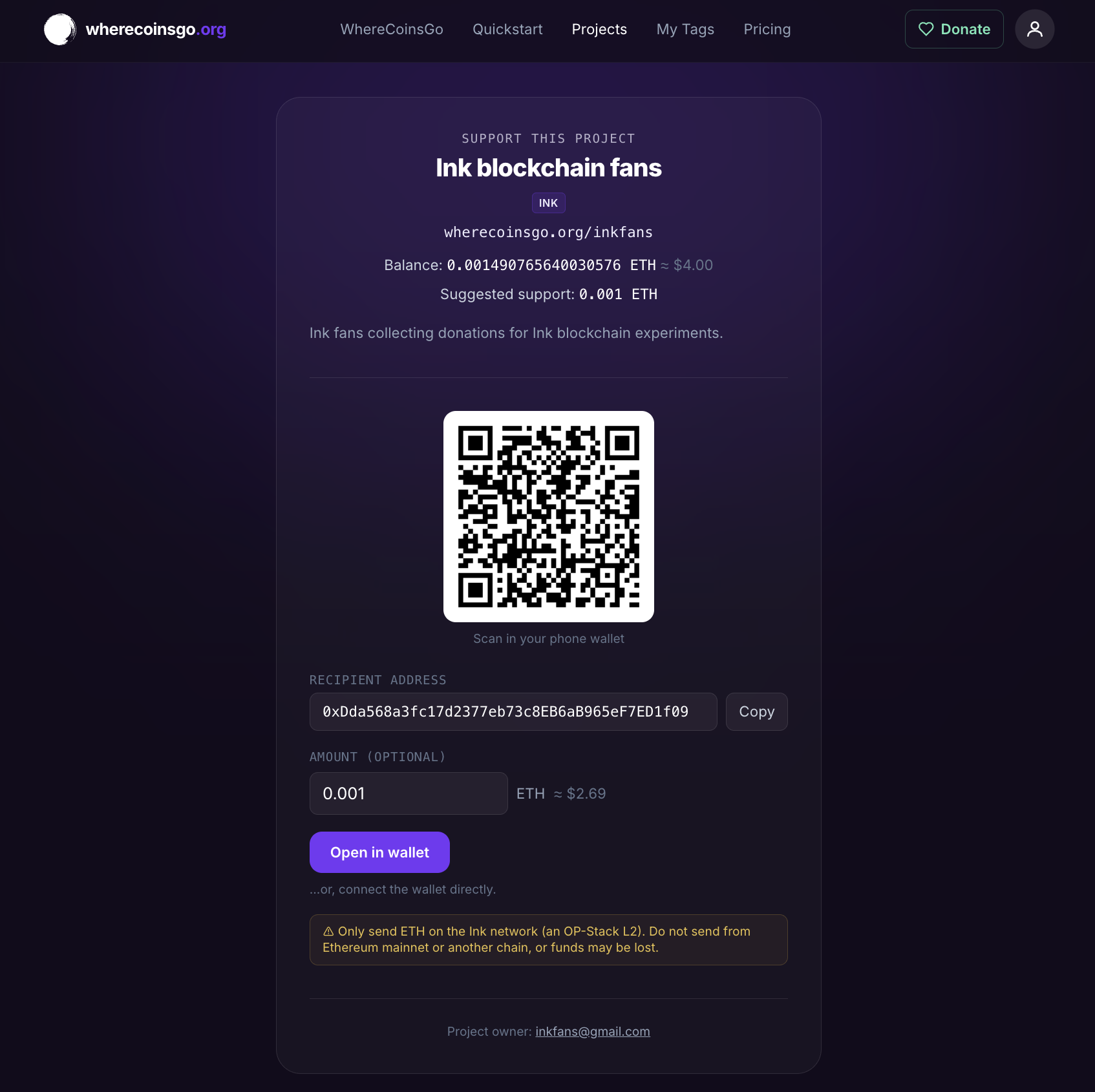
Offers one-click creation of your own Wherecoinsgo projects with shareable paylinks and QR codes, balance views and transaction history for transparent fund raising.
2. User-friendly blockchain explorer
Acts as an easy-to-use public interface for browsing the blockchain and transactions related to the submitted crypto wallet on Bitcoin, Ethereum and Ink blockchain. Suspicious intermediaries can also be spotted using an integrated sanction list.
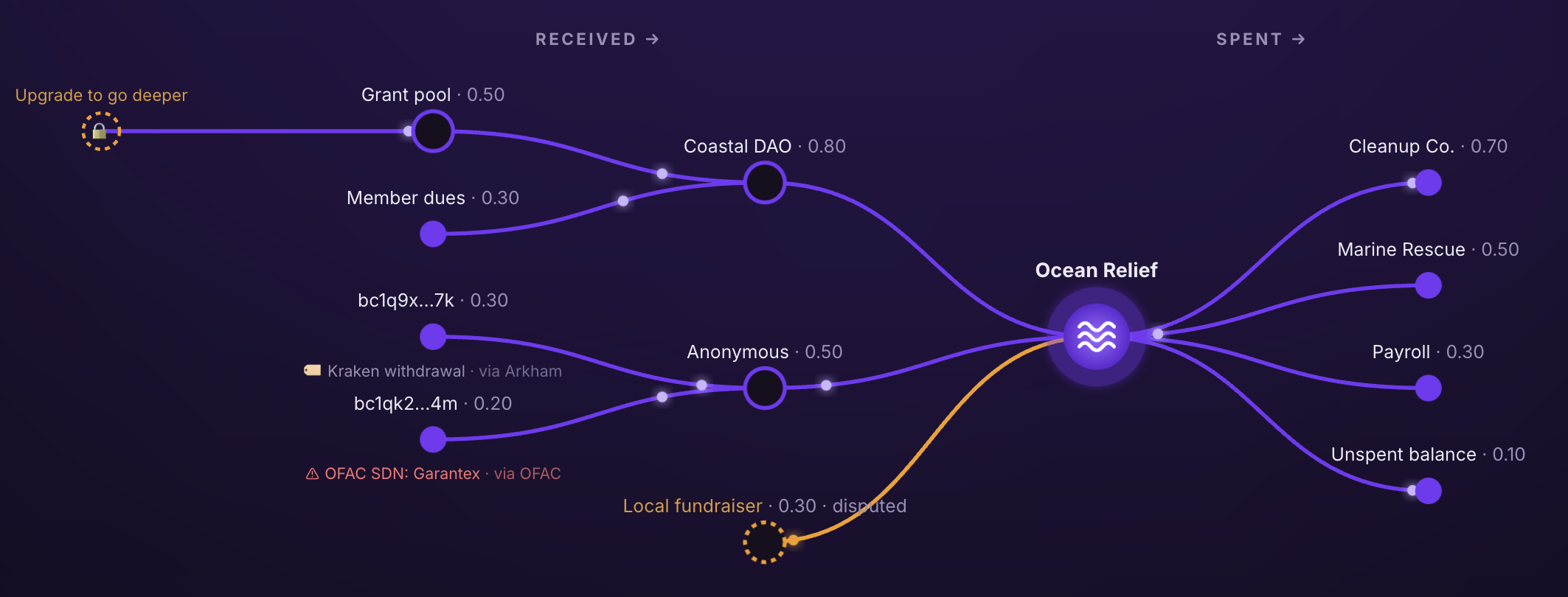
On top of these features, you can build charity programs, donation services, transparency accounts for public funding and more.
Wherecoinsgo vs “traditional” fundraising
| Feature | Wherecoinsgo | Traditional fund raising |
|---|---|---|
| Transaction drilldown | Infinite - follow any coin back to its origin | One layer deep - only the direct sender |
| Money flow direction | Bidirectional - see both received and spent funds | Usually one-directional - inflows are shown, spending needs a separate report/audit |
| Access | Public, permissionless - anyone can look, anytime, no approval needed | Private by default - statements require permission, NDA, or a formal audit request |
| Custody of funds | Non-custodial - money moves wallet-to-wallet, the platform never holds it | Custodial - the platform/bank holds and controls the funds, with chargeback/fee/freeze risk |
| Timeliness | Real-time - every confirmed block updates the picture instantly | Periodic - annual reports or audits, often months delayed |
| Reach | Borderless - anyone with a wallet can give or verify, no bank account or KYC needed | Geographically and institutionally gated - banking rails, KYC, cross-border friction |
Multi-chain
What is multi-chain? Multi-chain architecture offers wider options for the customers. People can collect funds on various blockchains - Bitcoin, Ethereum, Ink… Potentially you could fund your project by collecting even meme coins.
Ethereum and Ink are EVM-based blockchains and they use the same addresses, however the balances on each are different. See this example for the address 0x000000000000000000000000000000000000dEaD
- Ink blockchain: https://wherecoinsgo.org/inspect?address=0x000000000000000000000000000000000000dEaD&chain=ink
- Ethereum blockchain: https://wherecoinsgo.org/inspect?address=0x000000000000000000000000000000000000dEaD&chain=ethereum
That can be a surprising detail for beginners looking for “lost” funds.
Blockscout and Mempool
To interact with the blockchain and get the transaction data, we could run our own blockchain node and index all transactions for later lookups OR we could utilise existing blockchain explorers with mature API endpoints. The second option is definitely much better.
For Bitcoin, I traditionally selected mempool.space and the rest of the lookups are funnelled through Blockscout. Blockscout offers a nice advantage of supporting a wide range of blockchains which simplifies the platform architecture and makes the code slimmer and more unified. We do not have to use too many 3rd-party API endpoints. All the heavy lifting is done by Blockscout and expanding the product to further blockchains will be very easy.
What Wherecoinsgo is not
wherecoinsgo.org is not a forensics tool. I say that to myself when the transaction diagram looks too neat. The application always relies on underlying data and does not hide the fact that it is powered by Mempool and Blockscout, and advanced users can still use direct hyperlinks and dive as deep as needed in the underlying blockchain explorers.
Instead, wherecoinsgo.org focuses on:
- easy registration and fund raising project creation
- user-friendly UI also for crypto beginners
- appealing fund-raising capabilities by embedding donation buttons into your website, shareable paylinks or payment via QR code.